 Tahanima Chowdhury

S.M. Mushfiqur Rahman is a Software Engineer with five years of experience working with .NET, Azure, AWS, and SQL Server. He enjoys traveling, reading novels, listening to music, and coding in his spare time. Passionate about technology, he actively keeps himself updated with the latest industry trends. Currently, he is particularly enthusiastic about Artificial Intelligence and aspires to develop AI models that can help solve real-world problems.
Mushfiqur is currently working at Optimizely as a Senior Software Engineer. He secured the opportunity through an employee referral. The interview process consisted of three phases.
Phase 1: Problem-Solving Round
To prepare for the problem-solving round, Mushfiqur focused on strengthening his understanding of common problem-solving patterns, particularly ad hoc and greedy algorithms. He practiced regularly on online coding platforms, beginning with easier problems and gradually progressing to medium-level challenges to build consistency, confidence, and speed.
For greedy problems, he concentrated on identifying scenarios where locally optimal decisions lead to globally optimal solutions. For ad hoc problems, he worked on improving his ability to analyze constraints carefully and derive solutions without relying on predefined templates.
In addition to solving problems, he reviewed editorial solutions to learn alternative approaches and refine his thought process. His preparation strategy centered on consistent practice, pattern recognition, and improving problem-solving clarity.
Phase 2: Introduction and Software Engineering Process Round
The second phase was primarily a behavioral and experience-focused discussion. To prepare, Mushfiqur reviewed his experiences working within software development teams and reflected on various aspects of the software engineering process.
He focused on topics such as team collaboration, effective code review practices, task estimation through technical analysis, sprint planning, and Agile methodologies. He also refreshed his understanding of how Jira tickets are created, managed, and tracked throughout the software development lifecycle.
This preparation enabled him to confidently discuss both the technical and collaborative aspects of software engineering and demonstrate his experience working in professional development environments.
Phase 3: System Design (Low-Level + Practical)
For the system design round, Mushfiqur concentrated on core backend engineering principles and practical system design concepts commonly encountered in real-world applications.
His preparation included revisiting SOLID principles, clean code practices, design patterns such as Singleton, dependency injection lifetimes, and thread-safety considerations. He also reviewed how production-grade systems are architected, including caching strategies, concurrency management, and the behavior of different service lifetimes within dependency injection containers.
Additionally, he refreshed his knowledge of CI/CD pipelines and deployment processes, covering both self-hosted and cloud-hosted environments. To further strengthen his understanding, he studied security fundamentals, including OWASP guidelines, and explored architectural trade-offs related to scalability, performance, and maintainability.
Rather than focusing solely on theoretical concepts, his preparation emphasized understanding how these principles are applied in real production systems, which proved valuable during the interview process.
Special thanks to S.M. Mushfiqur Rahman for taking out the time to share his recruitment experience with me. If you have any queries, feel free to contact him at mushfiqur940@gmail.com
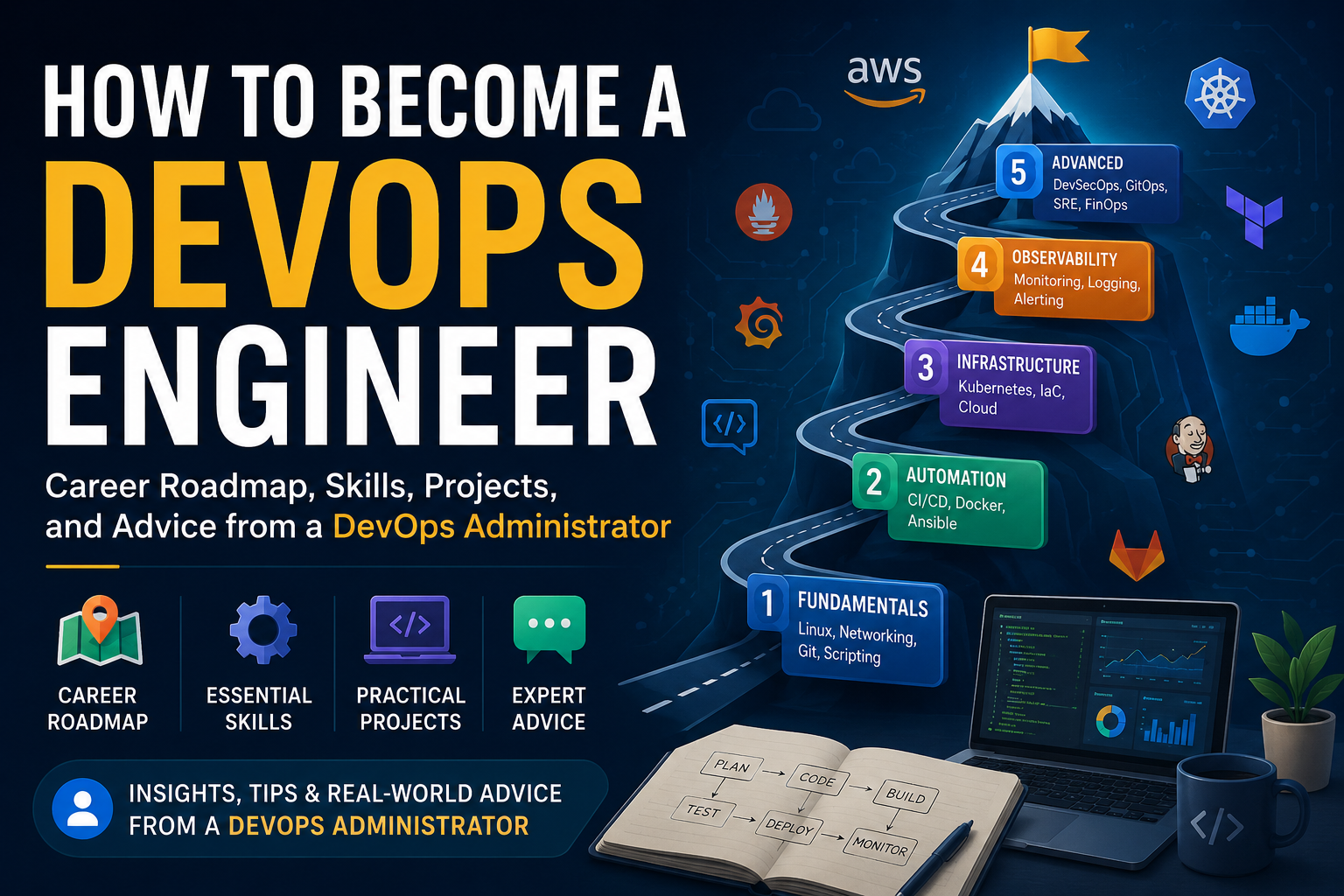 How to Become a DevOps Engineer: Career Roadmap, Skills, Projects, and Advice from a DevOps Administrator
 >
>