 Tahanima Chowdhury
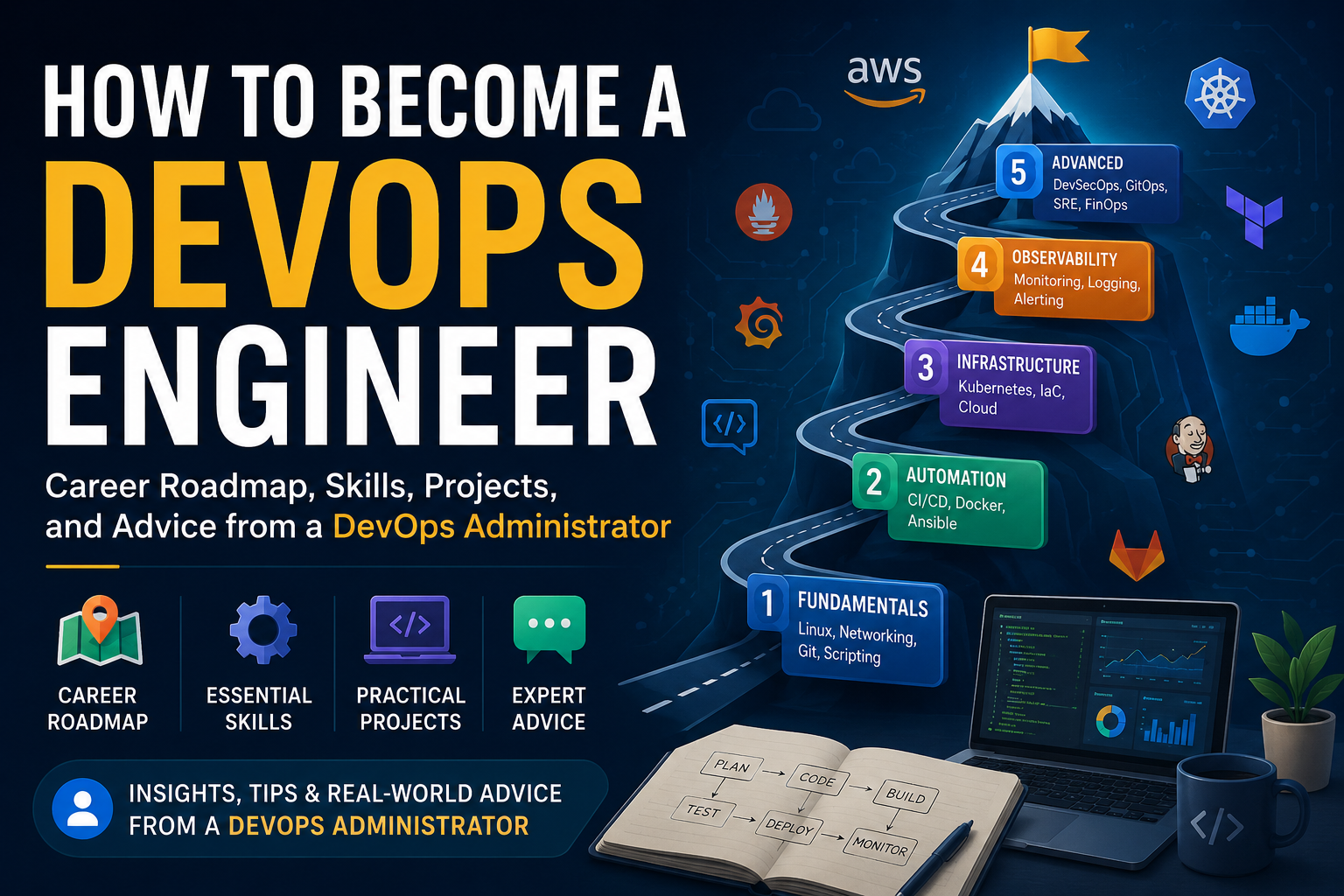
DevOps is one of the most talked-about disciplines in modern software engineering. Job descriptions are filled with terms like Docker, Kubernetes, CI/CD, Terraform, and cloud platforms. But beyond the buzzwords, what does a DevOps professional actually do? How do people transition into the field, and what should beginners focus on when starting their journey?
To answer these questions, I spoke with Nirjas Mohammad Jakilim, a DevOps Administrator II at Therap (BD) Ltd. with five years of industry experience. He shared his career journey, his perspective on the role, and practical advice for anyone interested in building a career in DevOps.
Quick Navigation
- A Career Built Through Solving Real Problems
- What Does a DevOps Engineer Actually Do?
- A Typical Day in DevOps
- Common Misconceptions About DevOps
- A Learning Roadmap for Beginners
- Recommended Learning Resources
- Why Hands-On Experience Matters More Than Certifications
- Projects That Help You Stand Out
- The Future of DevOps
- Final Advice for Aspiring DevOps Engineers
A Career Built Through Solving Real Problems
Nirjas’s path into DevOps wasn’t a direct one. He began his career working extensively with application servers and deployments, particularly managing WebLogic environments.
His responsibilities included deploying Java applications, tuning performance, troubleshooting production issues, and maintaining standalone servers. While doing this work, he noticed how much time was spent on repetitive manual tasks and began looking for ways to automate them.
That curiosity led him to develop scripts for WebLogic setup and application configuration, create Ansible playbooks for JDK and WebLogic patching, and automate deployment processes using Jenkins. Along the way, he also identified architectural limitations and worked on solutions to improve operational efficiency.
The goal was always the same: reduce manual effort, eliminate human error, standardize processes, and make deployments more reliable.
As his experience grew, so did his interests. He gradually moved into the observability space, researching and implementing logging and monitoring solutions such as LogScale, Vector, ELK, Grafana, Prometheus, and Datadog. This work involved building dashboards, configuring alerts, creating custom metrics, developing log parsers, and integrating authentication systems.
More recently, his focus has expanded to containerization and CI/CD initiatives. He has been involved in helping applications move from traditional standalone deployments to containerized environments, automating image builds and deployments, and exploring open-source solutions to simplify deployment management.
Reflecting on his journey, Nirjas emphasizes that most of his learning came from solving real operational challenges rather than following a predefined roadmap.
What Does a DevOps Engineer Actually Do?
According to Nirjas, the primary responsibility of a DevOps professional is rooted in the core philosophy of DevOps itself: reducing the gap between development and operations teams. The goal is to ensure that applications can move smoothly from a developer’s machine to production in a way that is efficient, reliable, and repeatable.
Achieving this involves:
- Building and improving deployment processes
- Automating repetitive tasks
- Maintaining infrastructure and application platforms
- Implementing monitoring and observability solutions
- Collaborating closely with development teams
- Identifying and removing operational bottlenecks
Beyond deployments, DevOps professionals are responsible for improving system reliability, performance, security, and overall operational efficiency.
Whether through CI/CD pipelines, infrastructure automation, monitoring platforms, or containerization technologies, the ultimate objective remains the same: delivering software faster, more reliably, and with fewer manual interventions.
A Typical Day in DevOps
One of the things that attracted Nirjas to the field is the variety of work involved.
His day often begins with routine operational checks to ensure that applications, servers, monitoring systems, and deployment pipelines are functioning correctly.
After that, the focus shifts to whatever the team’s priorities demand. This could include:
- Setting up new environments
- Implementing automation solutions
- Improving observability systems
- Deploying applications
- Troubleshooting production incidents
- Evaluating and testing new tools
Collaboration is also a significant part of the role. DevOps professionals frequently work with developers, operations teams, and other stakeholders to resolve issues, discuss deployment requirements, and ensure smooth software delivery.
As Nirjas puts it, DevOps is a blend of operations, automation, troubleshooting, and teamwork—and no two days are exactly alike.
Common Misconceptions About DevOps
Despite its popularity, DevOps remains one of the most misunderstood areas of software engineering.
“DevOps is just about tools”
Many people assume DevOps is simply a collection of technologies such as Docker, Kubernetes, Jenkins, or cloud platforms.
Nirjas disagrees.
The tools are important, but they are only a means to an end. The real goal is improving collaboration, automation, reliability, and software delivery processes.
“DevOps engineers only write pipelines”
Automation is certainly a major part of the job, but much of the work involves understanding applications, troubleshooting complex issues, improving observability, and designing infrastructure solutions.
“DevOps is purely an operations role”
In reality, DevOps sits at the intersection of development and operations.
Professionals in this field need to understand how applications are built, configured, deployed, and monitored, while also being comfortable managing the underlying infrastructure.
“DevOps eliminates production issues”
No system is perfect.
The purpose of DevOps is not to eliminate problems entirely but to reduce risk, improve visibility, automate repetitive work, and make systems easier to recover when failures occur.
A Learning Roadmap for Beginners
If someone were starting from scratch today, Nirjas recommends focusing on fundamentals before diving into popular tools. His suggested learning path looks like this:
1. Learn the Fundamentals
Start with:
- Linux Fundamentals
- Networking Fundamentals
- DNS
- HTTP/HTTPS
- TCP/IP
- Load Balancing
Without understanding how systems work, it becomes difficult to automate or troubleshoot them effectively.
2. Learn Version Control and Scripting
Next, focus on:
- Git and Git workflows
- Bash scripting
- Python basics
These skills form the foundation of automation.
3. Understand Servers and CI/CD
Learn how applications are deployed and managed by studying:
- Server administration
- Application deployment concepts
- CI/CD fundamentals
4. Move into Modern Infrastructure
Once the basics are comfortable, explore:
- Docker
- Kubernetes
- Ansible
These technologies are widely used in modern deployment environments.
5. Learn Cloud, IaC, and Observability
Finally, build knowledge in:
- AWS, Azure, or Google Cloud
- Terraform
- Monitoring and observability platforms
- Logging systems
Throughout the process, he strongly recommends building projects and maintaining personal lab environments.
Recommended Learning Resources
Nirjas recommends a practical, hands-on approach to learning. Some of his preferred resources include:
- Official documentation
- Linux Journey for Linux fundamentals
- KodeKloud
- YouTube technical channels
- Udemy courses
- AI tools such as ChatGPT and Gemini
- NotebookLM for studying technical documentation and books
He particularly highlights NotebookLM as a useful way to interact with documentation and learning materials more efficiently.
Why Hands-On Experience Matters More Than Certifications
When discussing certifications, Nirjas takes a balanced but experience-first approach. While certifications can be valuable, he believes they should never replace practical knowledge.
Certifications that can provide value include:
- AWS Certified Solutions Architect – Associate
- AWS Certified DevOps Engineer – Professional
- Google Associate Cloud Engineer
- Certified Kubernetes Administrator (CKA)
- Certified Kubernetes Application Developer (CKAD)
- HashiCorp Terraform Associate
- RHCSA
- RHCE
However, he cautions against collecting certifications without developing real-world skills. Employers are often far more interested in what you have built, automated, deployed, and troubleshot than the badges displayed on a résumé.
Projects That Help You Stand Out
For aspiring DevOps professionals, practical projects are one of the best ways to demonstrate capability.
Nirjas recommends building:
- GitHub projects with complete CI/CD pipelines
- Dockerized multi-service applications
- Kubernetes deployment projects
- Infrastructure-as-Code projects using Terraform
- Ansible-based automation projects
- Personal monitoring and alerting systems using Prometheus and Grafana
- Centralized logging solutions
- Cloud-hosted personal infrastructure
- Publicly deployed applications
For those without professional experience, maintaining a home lab, managing self-hosted applications, contributing to open source, and practicing incident troubleshooting can provide valuable hands-on exposure.
The Future of DevOps
As the industry evolves, several trends are becoming increasingly important.
Areas gaining momentum include:
- Platform Engineering
- AI-Assisted Operations
- AIOps
- Site Reliability Engineering (SRE)
- Infrastructure Automation
- GitOps
- Cloud-Native Architectures
- Kubernetes Ecosystem Growth
- Observability and OpenTelemetry
- DevSecOps
- FinOps and Cloud Cost Optimization
At the same time, skills such as manual server provisioning, manual deployments, and heavy reliance on GUI-based administration are becoming less relevant as organizations continue to embrace automation.
Final Advice for Aspiring DevOps Engineers
When asked for one piece of advice he would give to anyone entering the field, Nirjas’s answer was simple:
“Focus on fundamentals before tools. Learn how systems work, not just how tools work. Build things, break things, fix things, and document what you learn.”
Technology will continue to evolve. New tools will appear, and old ones will disappear. However, a strong understanding of Linux, networking, automation, and troubleshooting will remain valuable throughout your career.
For anyone considering a path into DevOps, that may be the most important lesson of all.
This article is part of the Career Insights series on Tahanima’s Blog, where professionals share their career journeys, responsibilities, learning paths, and advice for aspiring engineers.
Special thanks to Nirjas Mohammad Jakilim for sharing his experience and insights with the community. If you have any queries, feel free to contact him at nirzashzakilim@gmail.com
 Recruitment Stories - Anika's Experience at Brain Station 23
 >
>