 Tahanima Chowdhury
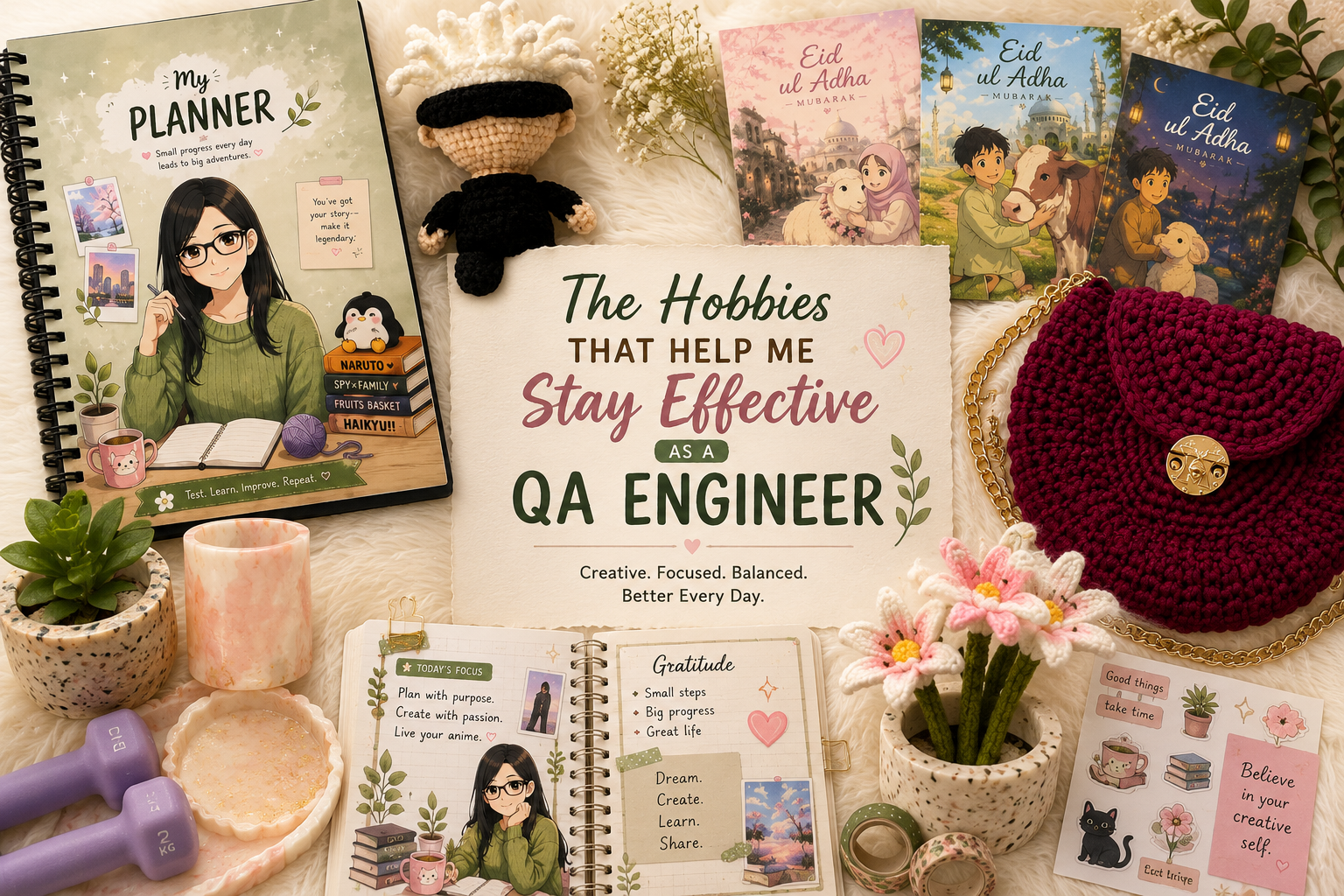
People often ask how I manage to stay motivated and productive at work while also writing technical articles and pursuing various creative activities. The truth is that I don’t spend all my time thinking about software testing. In fact, one of the biggest reasons I remain effective as a QA Engineer is because I have hobbies outside of work.
Before I share those hobbies, I want to emphasize why I believe having interests outside your profession is important. Office work can be mentally exhausting, especially for roles like software quality assurance that require continuous concentration, critical thinking, and attention to detail. Having hobbies gives your mind an opportunity to disconnect from work-related stress, reduces screen time, and helps you recharge both mentally and physically.
Over the years, I’ve found that these hobbies have improved my energy, creativity, patience, and overall well-being. Those improvements have naturally carried over into my professional life as well.
1. Brisk Walking and Dumbbell Workouts
About six months ago, I was experiencing very low energy during office hours. I found it difficult to concentrate on my work and stay motivated throughout the day.
To improve my health, I started brisk walking with one of my colleagues. Since we usually return home in the same office microbus, instead of going straight home, we spend around 40 minutes brisk walking in a nearby park before heading to our respective homes.
I also bought a pair of 2 kg dumbbells and started following Chloe Ting’s dumbbell workout videos on YouTube.
These two habits significantly improved my energy levels throughout the day and helped me manage stress, anxiety, and depression. What surprised me most was how quickly I noticed the benefits.
Being physically active has also made me more focused during office hours. Instead of feeling mentally exhausted by the afternoon, I now find it easier to stay attentive during meetings, think through complex problems, and remain productive throughout the day.
2. Crochet
About two years ago, I came across some crochet plushies on a Facebook page and immediately wanted to buy one. I asked my husband which one he thought I should purchase.
Instead of helping me choose one, he simply said, “You don’t need to buy it—you can make it yourself.”
At that time, I didn’t know the first thing about crochet, but that comment stayed with me. I started watching beginner tutorials on YouTube, bought the necessary materials, and began my crochet journey.
Crochet is a completely handmade craft that cannot truly be automated by machines. My favorite type of crochet is making amigurumi plushies. Although each project takes many hours to complete, I find the process incredibly relaxing and rewarding.
I’ve gifted many of my crochet creations to friends, family members, and colleagues. Their reactions have been overwhelmingly positive, and many have encouraged me to start a small crochet business.
Crochet has also taught me patience. Every stitch contributes to the final product, and rushing usually leads to mistakes that need to be corrected later. That mindset translates surprisingly well to software testing, where careful attention to detail often makes the difference between finding a bug and missing it.
3. Resin and Gypsum Art
After enjoying crochet, I became interested in exploring other creative hobbies.
Since I already followed many craft-related Facebook pages, I was constantly discovering new materials and techniques. That’s how I found resin and gypsum art.
I purchased several molds—mostly for vases and organizers—and started making decorative pieces for my home and office desk. I enjoyed the hobby so much that I introduced it to my sister, who now enjoys it as well.
Resin and gypsum projects allow me to experiment with colors, designs, and different combinations of materials. It gives me an opportunity to be creative without worrying about perfection, which is a refreshing change from the structured nature of software testing.
4. Watching Anime
My sister introduced me to anime back in 2012, and I’ve been watching it ever since.
Anime helps me unwind after a busy day. Some series make me laugh, some make me emotional, and others leave me feeling inspired.
Some of my favorites include:
- Demon Slayer
- Hunter × Hunter
- Haikyu!!
- Frieren
- Ouran High School Host Club
- Kamisama Hajimemashita
- My Love Story with Yamada-kun at Lv999
Sometimes, simply taking a break from work and immersing myself in a good story helps me return with a fresh perspective. I’ve often noticed that solutions to problems become much clearer after allowing my mind to rest.
5. Creative Journaling
Creative journaling is another hobby I discovered while exploring different craft communities.
The concept is simple—you decorate journal pages using stickers, washi tape, stamps, and various embellishments. There are no strict rules, which makes it a very relaxing activity.
One of the things I enjoy most about creative journaling is the immediate sense of satisfaction it brings. It allows me to express creativity in a completely different way from my technical work.
As a QA Engineer, I’m constantly working with requirements, documentation, and structured processes. Creative journaling gives me an outlet where there are no right or wrong answers, which helps me maintain a healthy balance between analytical thinking and creativity.
6. Making Cards and Notebooks
I recently bought a printer and have been experimenting with different DIY paper crafts.
One of my first projects was designing and printing Eid greeting cards, which I distributed among my colleagues. It was a wonderful experience.
I’ve also made personalized notebooks for myself and printed my own stickers. I’m still exploring what else I can create using my printer, and that’s part of the fun.
I particularly enjoy designing personalized items because they allow me to combine creativity with problem-solving—something that’s also central to software quality assurance.
Hobbies I’ve Tried but Didn’t Continue
Not every hobby becomes a long-term passion, and that’s perfectly okay. Exploring new interests is part of the fun.
Pipe Cleaner Crafts
I tried making decorative lily flowers using pipe cleaners and used them to decorate my resin and gypsum vases. Although the results looked nice, I didn’t continue with the hobby.
Coloring
I bought coloring books and supplies because I wanted to give coloring a try. However, I didn’t enjoy it as much as I expected, so I eventually stopped.
LEGO Character Builds
I built two cartoon characters using LEGO bricks. While the finished models looked great, I personally found the building process too tedious to continue.
Trying these hobbies also taught me that it’s okay to discover something isn’t for you. Every new hobby doesn’t have to become a lifelong commitment.
Hobbies I’d Like to Explore Next
There are still many creative hobbies on my wishlist. Some that I’d like to try in the near future are:
- Punch needle embroidery
- Embroidery
- DIY bookbinding
I’m looking forward to learning these crafts for the same reason I started the others: the joy of creating something with my own hands.
Final Thoughts
Many people think becoming a better QA Engineer only means learning new testing tools, programming languages, or automation frameworks. While those skills are certainly important, I’ve learned that taking care of yourself outside of work is just as valuable.
These hobbies have helped me become more energetic, patient, focused, and creative. They’ve taught me to slow down when necessary, enjoy the process of learning, and maintain a healthier work-life balance. I genuinely believe they’ve made me not only a happier person but also a better software tester.
 Career Insights from a Senior Software Engineer at Grab
 >
>